 Flip through our history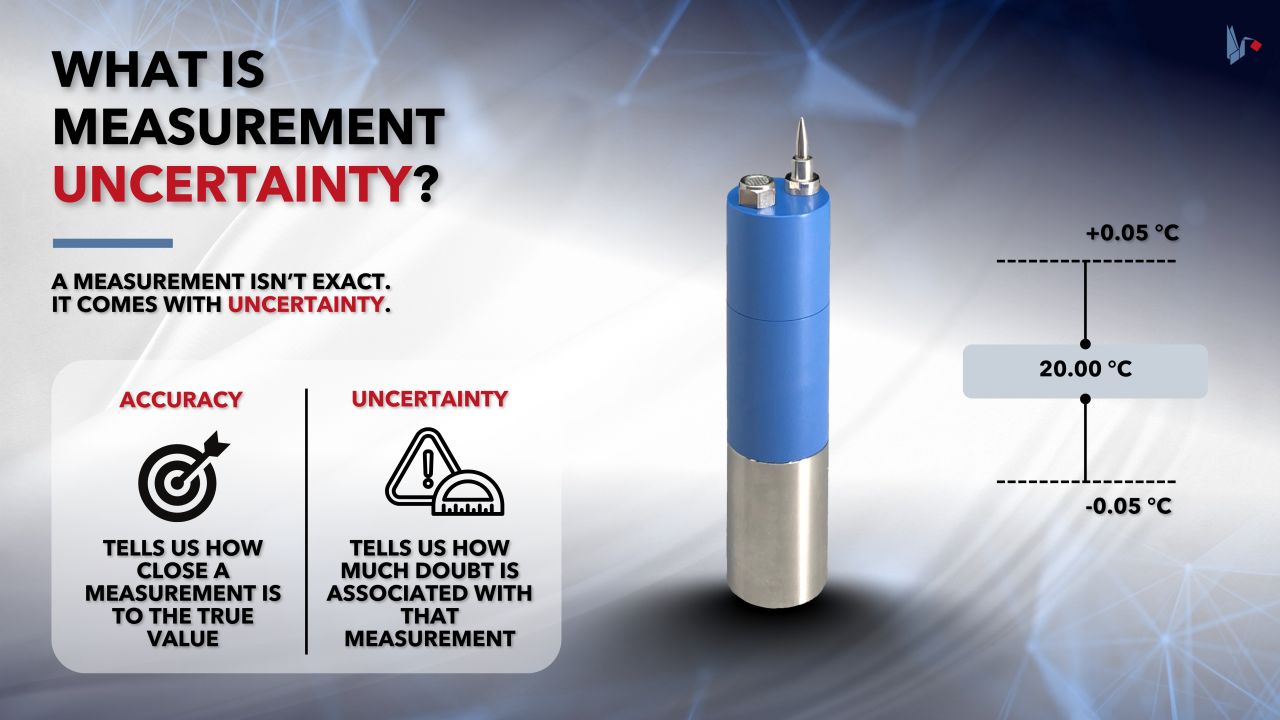
When a data logger measures 20.00 °C, can we say that the actual temperature is exactly 20.00 °C?
Not quite.
Every measurement has a certain degree of uncertainty.
Measurement uncertainty describes the range within which the true value is expected to lie, considering the factors that can affect the measurement.
For example, a calibration certificate might report:
- Measured temperature: 20.00 °C
- Measurement ucertainty: ±0.05 °C
This doesn't mean that the instrument is simply “wrong” by 0.05°C. It means that, based on the calibration process and the associated sources of uncertainty, the measurement is associated with a ±0.05 °C uncertainty.
Where can uncertainty come from?
- Reference equipment used during calibration
- Sensor performance
- Environmental conditions
- Resolution of the instrument
- Repeatability of measurements
- Calibration procedure
Why does it matter?
Because when measurements are used for validation, quality control, or critical processes, knowing the uncertainty helps you understand how reliable and meaningful the measurement really is.
And remember:
Accuracy tells us how close a measurement is to the true value.
Uncertainty tells us how much doubt is associated with that measurement.


